Growth durch User Activation
Premium-Conversion von 12% auf 57% gesteigert

At a glance
Industry:
Digital Health
Duration:
12 weeks
Services:
The project
Despite innovative features, only 12% of therapists converted from the free trial to the paid premium version. Through strategic user onboarding, well-placed gamification, and thoughtful feature tiering, we were able to increase this rate to 57%.
About Minime
Since 2022, Minime has been revolutionizing psychotherapeutic treatments with its digital health app. Their goal is to strengthen traditional behavioral therapy through digital innovation, focusing on the collaboration between therapists and patients using evidence-based behavioral therapy protocols.
The challenge
Price perception vs. value perception
User interviews revealed that therapists were only willing to pay about the price of a "Netflix subscription" per month, despite the significant workload reduction and improved therapy outcomes.
Feature Overload During Trial
Too many features, not enough focus: therapists got lost in the "sandbox"—a demo patient profile for testing—and overlooked the actual practical benefits.
Lack of Success and Motivation
Valuable "aha" moments were happening too late: therapists only discovered how to effectively support patients with the app late in the process. As a result, the app's value was quickly called into question.
Our Approach
Together with Minime, we developed a focused 12-week strategy with one clear goal in mind: to increase MRR in a measurable and sustainable way.
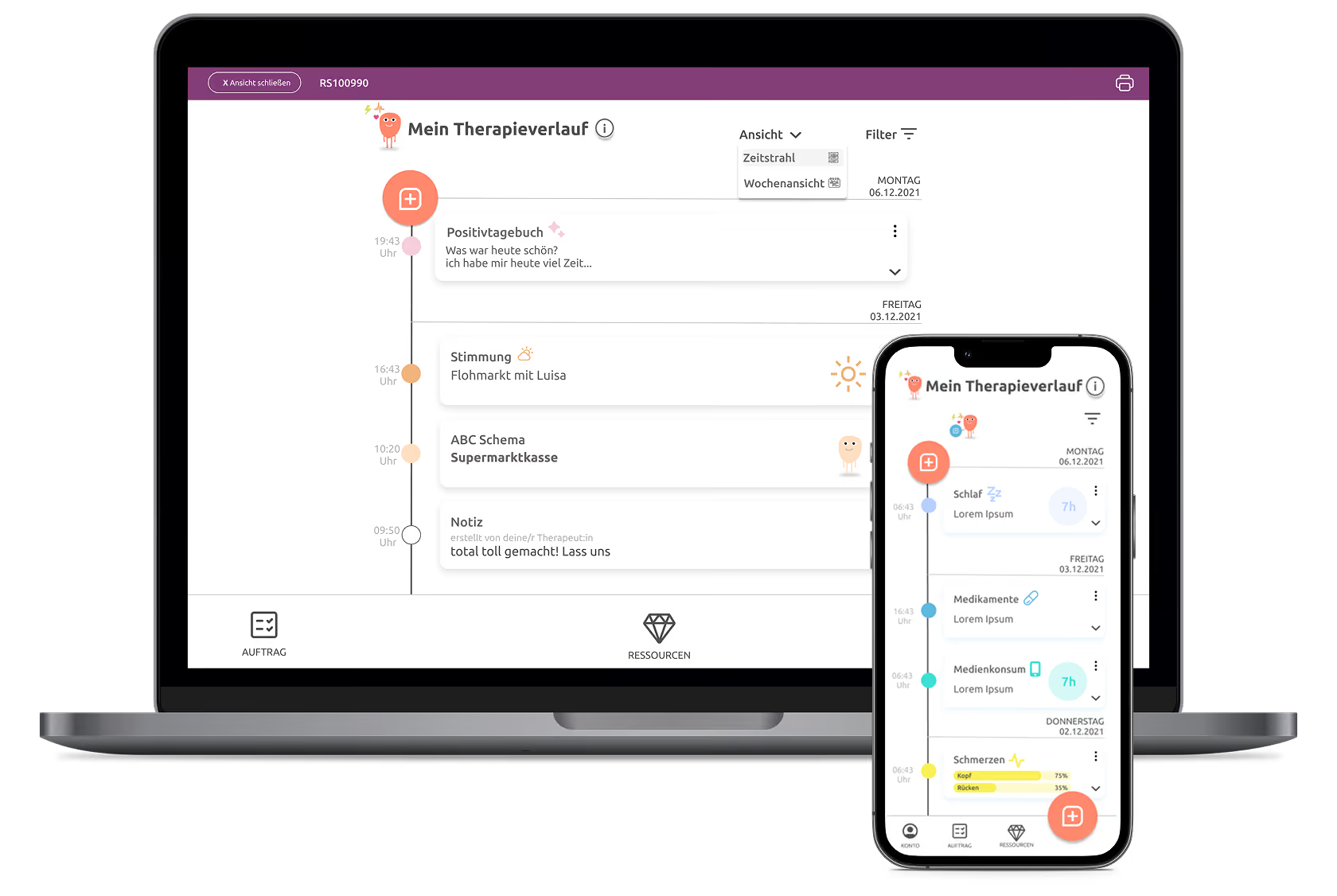
Research & JTBD Interviews
Through the interviews, we gained a deep understanding of the app's actual tasks: beyond tracking progress, it serves primarily to build routines, facilitate follow-ups, and act as a memory aid in the event of a change in therapist. Therapists, meanwhile, are supported in their work, allowing them to prepare better, demonstrate efficacy, and anticipate potential dropouts more effectively. With these insights, we were able to target both user groups precisely.
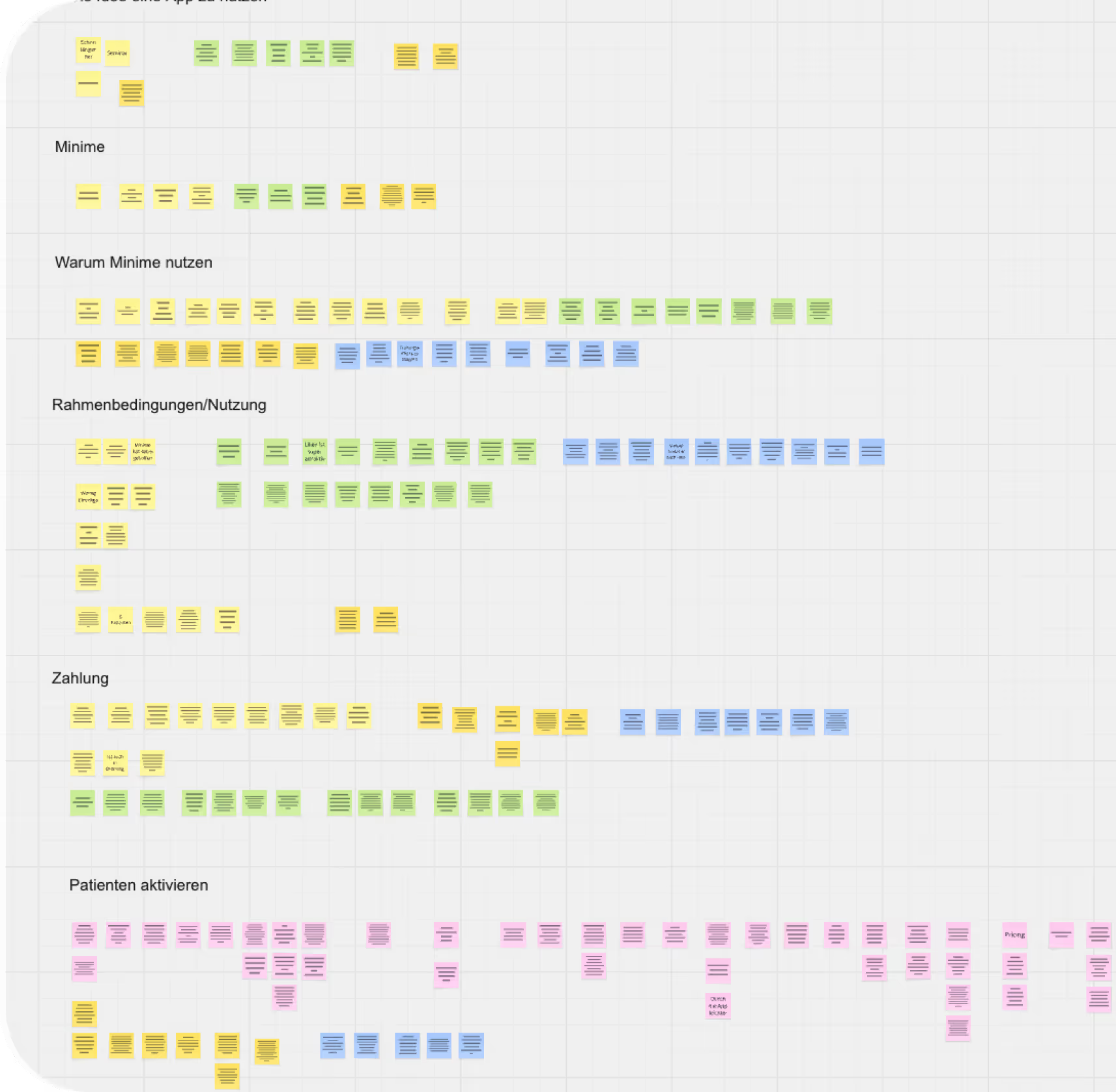
Strategic Realignment: Product-Led Pricing Model
We developed a freemium model that is clearly understandable for therapists at every relevant touchpoint. Feature segmentation was restructured: the free trial now focuses on a few core functions, replacing the previous, opaque "sandbox" approach.
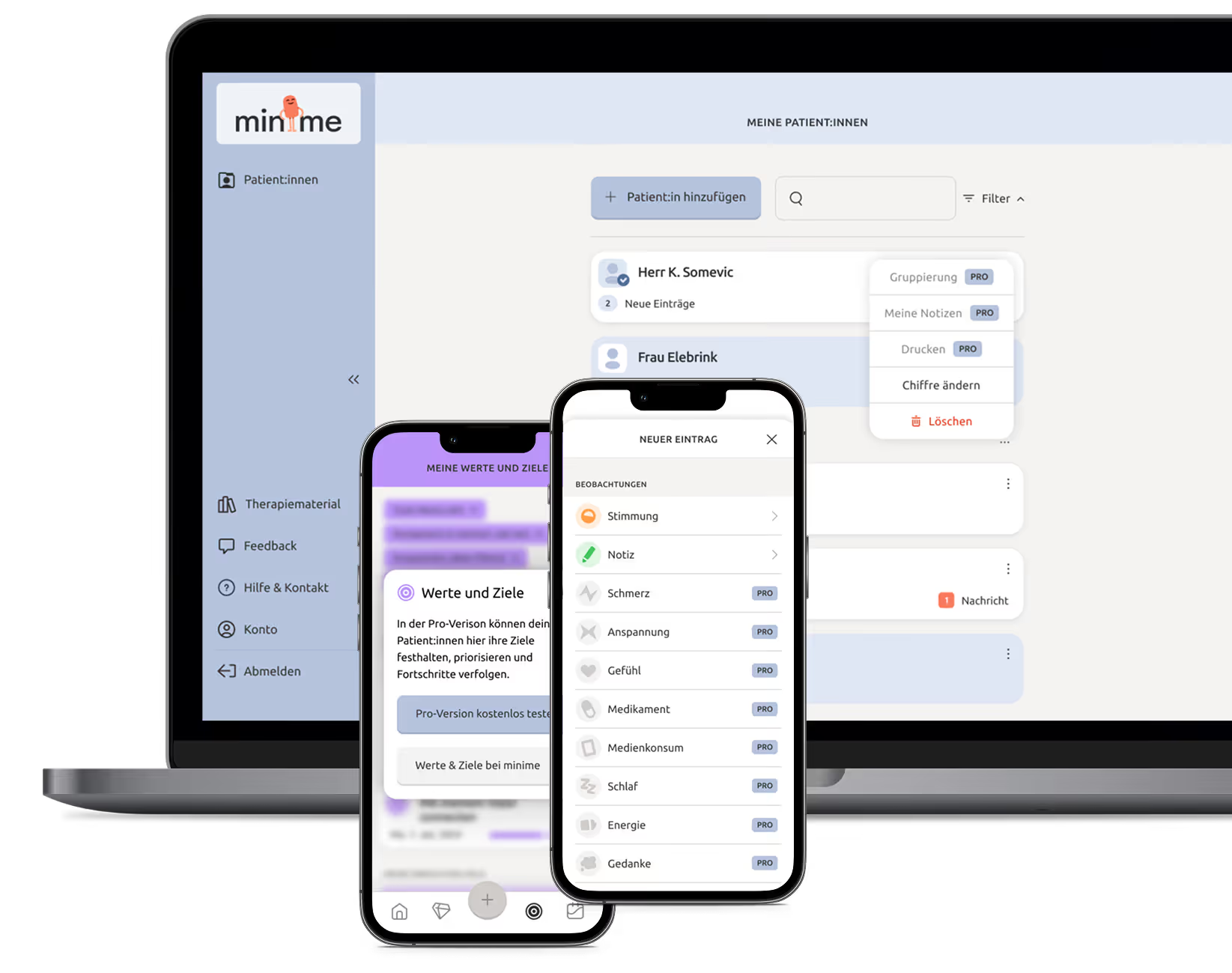
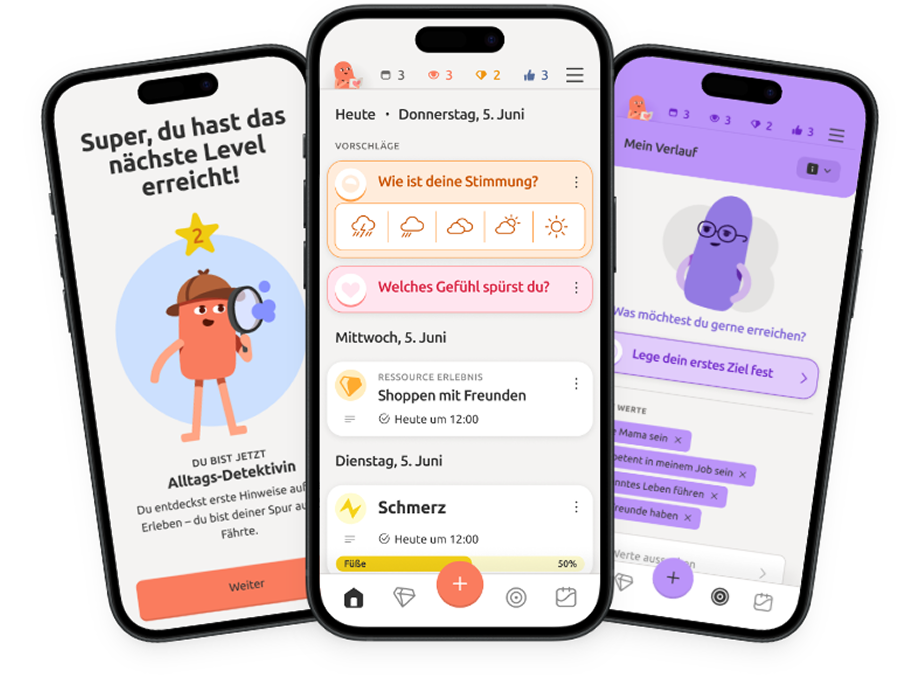
Gamification & User Onboarding
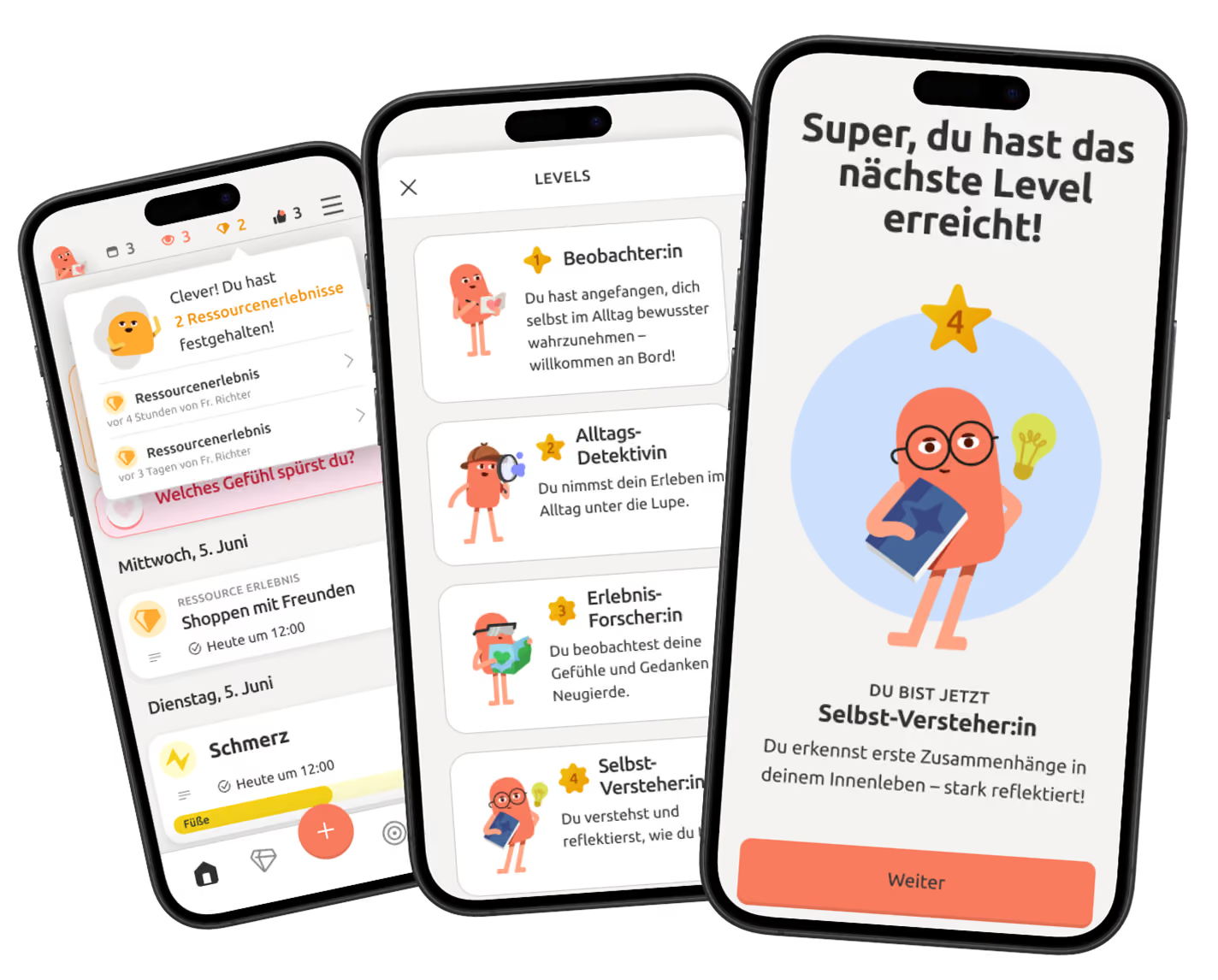
A new mascot, checklists, and short videos guide patients and therapists through the initial steps. Subtle gamification elements, such as progress bars and achievements, keep engagement high without compromising the app's medical credibility.

Research & JTBD Interviews
Through interviews, we gained a deep understanding of user needs: patients require clear goals to stay motivated and actively integrate the app into their daily lives. Therapists, on the other hand, need more support and a personalized onboarding process to use the app effectively. This strengthens the collaboration between both groups in a targeted way.
Strategic Realignment: Product-Led Pricing Model
We developed a freemium model that is visible and easy to understand for therapists at every relevant touchpoint. Feature segmentation was clearly structured: the free trial focuses on a few core functions, while the previously confusing "sandbox" has been removed.
Gamification & User Onboarding
A redesign featuring a mascot, checklists, and videos makes getting started easier for both patients and therapists. Subtle gamification elements, such as progress bars and achievements, boost engagement without compromising medical professionalism.
See for yourself
Before
After


Solution
The new five-step onboarding system systematically guided therapists to their "aha moments" through progressive feature unlocking.
Result
A 57% higher trial-to-paid conversion rate and 180% more patient engagement significantly boosted MRR. Therapists discovered the premium value organically.
“I never thought we could activate our users so much more effectively.”
